
Memory is advisory, never authority.
It retrieves and interprets history, with citations. It can never approve, spend, sign, or publish anything.
Projects / Agent reasoning, memory, and governance
A memory that outlives the session, and a mind that tidies it.
A local-first MCP memory server over a plain folder of Markdown notes, so Claude and agents keep continuity between sessions. A second layer looks after the memory: it notices what was superseded, duplicated, or stale and proposes changes for a person to accept. Memory is advisory, never authority.
Both layers are built and tested (664 tests). It has not had a human security audit, has only been verified on macOS, is not yet used day to day, and the integrations with the other projects are planned, not live.
git clone https://github.com/spacepacket1/e3d-brain.git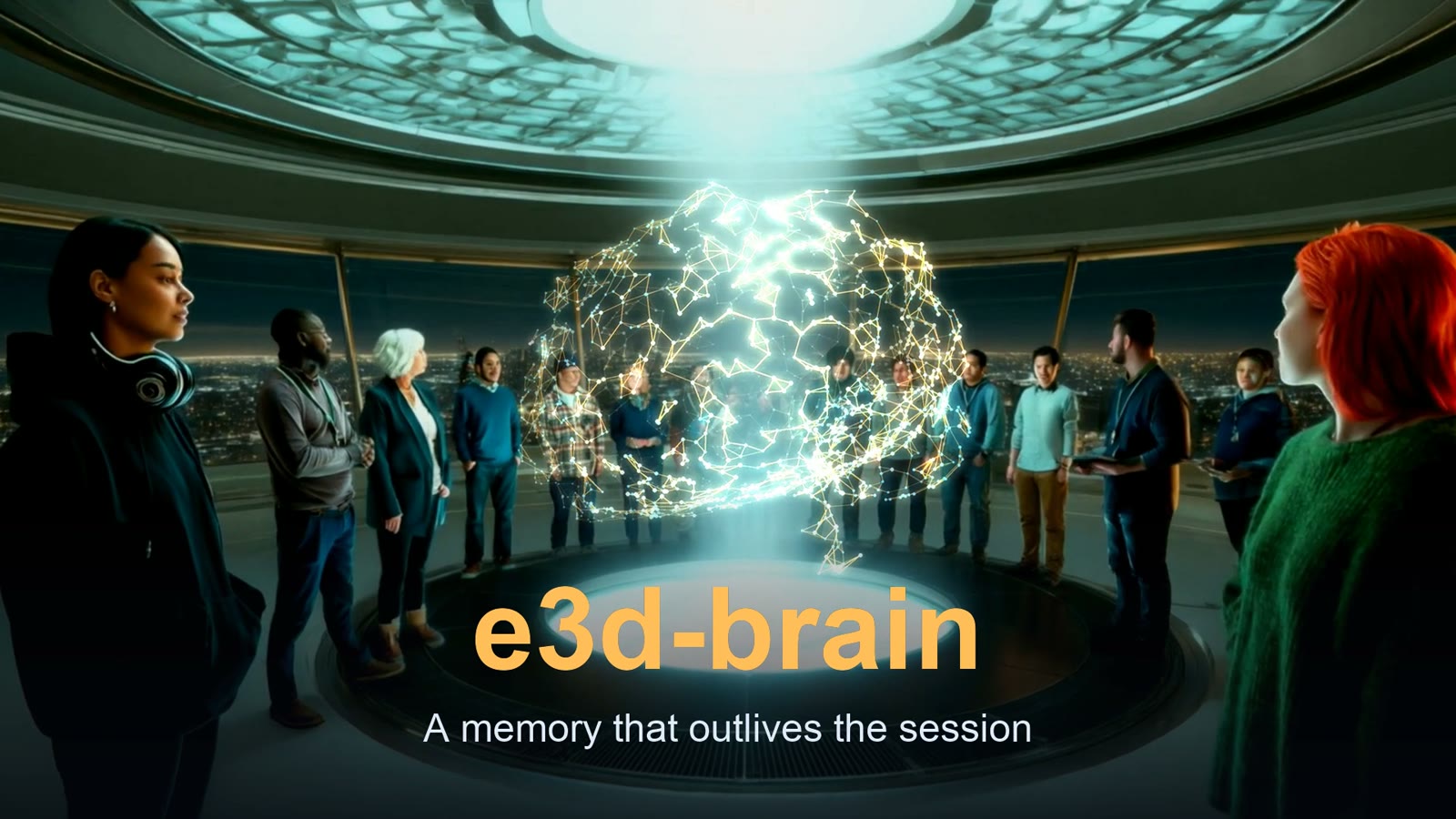 ▶ Watch the concept film (1:52)
Every AI session starts blank. Claude Code forgets last week's decision. An agent repeats Tuesday's mistake. A team re-explains what it already settled. The records exist, but the people and agents doing the work cannot reach them at the moment they matter.
It retrieves and interprets history, with citations. It can never approve, spend, sign, or publish anything.
Nothing becomes permanent memory, and no existing note changes, until a person says yes. Every change is undoable.
15 phases built
A small, local-first MCP server over a plain folder of Markdown (an Obsidian vault). Ranked search over a rebuildable SQLite index, with every result carrying a stable id, a revision, and a citation pinned to that exact revision so stale citations can be detected. Three fixed modes: inbox for a person's Claude, journal for an agent's own expiring log, and read-only for a curated brain.
9 phases built
Owner-run jobs that read the brain and write typed, cited, previewable proposals: which decision superseded which, what is duplicated, what real outcomes taught, what has gone stale, and what keeps being asked with no good answer. Nothing is applied by a job, and no MCP tool can start one.
ebrain review list            # typed proposals, with authentication and taint
ebrain review diff <id>       # the exact change against the current notes
ebrain review accept <id>     # revision-checked, crash-safe, undoable
ebrain review reject <id>     # remembered, so it is not proposed again
ebrain review undo <id> # restores what accept changedMemory is not the record. It is the reader of the record.
We build these to help others. If you want a system like this working in your business, that is what our consulting is for.